Oct 2023/Fullstack/competition

WaveFarm

Built under competition constraints, WaveFarm prioritized fast weather access through geolocation, city search, and modular UI flow.

Domain
Fullstack
Role
Lead Developer
Output
Web App
Category
Weather Information Product
Project Framing

A source-backed case study built for recruiter review

This reading path makes the problem choice, evidence quality, user framing, execution decisions, and proof trail visible without overstating what the sources support.

Project Type
competition

Competition web app that delivers weather insight with geolocation support and fast-access user experience.

Orientation
Tech

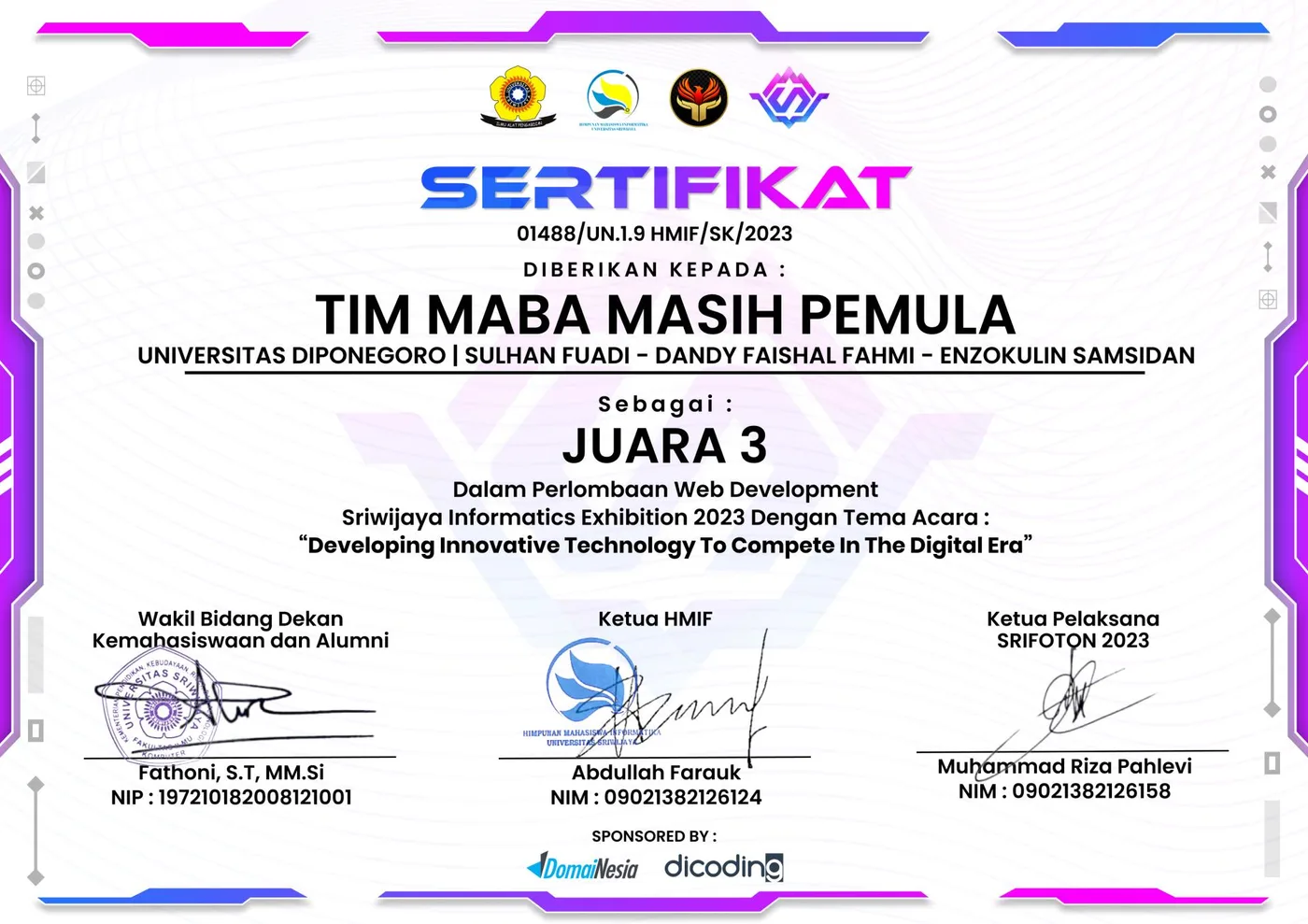
Achieved 3rd place at a national web development competition.

Core Stack
Vanilla JS · HTML · CSS · OpenWeather API

Framework-free modular JavaScript frontend using external weather API and local storage for user convenience.

Why This Problem Mattered

Problem framing before execution

The case-study layer starts with why this problem was selected and how the context justified investment.

Problem Framing Map

Issue

Weather products lose usefulness when users cannot move from location context to forecast insight quickly enough.

Context

WaveFarm was built under competition constraints, so its strongest portfolio signal comes from translating geolocation, city search, and modular UI flow into a fast-access weather product.

Why Selected

It is a strong supplementary candidate because it adds competition-backed frontend/fullstack craft with reviewer-safe technical storytelling.

Problem statement

Users needed fast and accessible weather insight with minimal interaction overhead.

Solution thesis

Built a modular weather application with geolocation, city search, and forecast views.

Research and Evidence

What supports the narrative

Evidence is surfaced with its source type and credibility note so the recruiter can quickly see what is directly backed versus intentionally constrained.

Fast-access product framing
local

The current narrative explicitly centers minimal interaction overhead, geolocation, and city-search pathways.

Credibility: Backed by the detail intro, problem statement, and visual snapshot already recorded in the project entry.
Competition-backed proof
local

WaveFarm achieved 3rd place in a national web development competition.

Credibility: Supported by the proof, metrics, and deep-dive source used for the project record.

Credibility Notes

  • The case is presented as competition-backed weather-product execution, not as a live public weather platform with verified user metrics.
  • No retention, forecast-accuracy, or traffic claim is added beyond the explicit implementation and award evidence.
Who The User Was

User framing stays explicit

When formal research artefacts are not available, the page still explains who the work served and why that user framing is justified by the existing sources.

Primary user
Users who need quick weather access with minimal friction between context and forecast.

The strongest source-backed product value lies in reducing interaction overhead through geolocation and city search.

Reviewer stakeholder
Reviewers evaluating whether a fast-access weather experience is backed by coherent frontend structure and API integration.

The competition context and modular vanilla implementation are key recruiter-safe proof points.

Decision Flow

How design thinking translated into decisions

The goal is to show the trace from research and insight to concrete product or system decisions, then to the outcomes those decisions supported.

Design Thinking Flow

Each step keeps the movement from evidence to action explicit before the rationale expands it.

  1. Step 1
    Utility-first framing

    Defined the product around speed of weather access rather than feature bloat.

    Signal: Minimal interaction overhead became the core user promise.
  2. Step 2
    Context-to-forecast journey

    Used geolocation and city search to help users reach the right forecast path quickly.

    Signal: The interaction model supports fast context switching.
  3. Step 3
    Framework-free delivery

    Kept the frontend modular and maintainable even without framework abstraction.

    Signal: The project demonstrates fundamentals-driven frontend craftsmanship.

Decision Rationale

Each decision keeps the path from insight to execution visible before ending on the outcome signal.

Geolocation plus search
Insight

Weather apps feel slow when users must overwork to reach relevant local context.

Decision

Combined geolocation detection with city-search flow.

Outcome

The product moves users to usable forecast context faster.

Modular vanilla implementation
Insight

Competition delivery can still stay maintainable without defaulting to a heavy framework.

Decision

Used modular HTML/CSS/JS architecture with OpenWeather integration.

Outcome

The app signals strong frontend fundamentals and readable implementation structure.

Solution and System Execution

Execution choices and delivery details

This section preserves the technical and operational substance: architecture, responsibilities, trade-offs, and implementation quality signals.

System Design

Framework-free modular JavaScript frontend using external weather API and local storage for user convenience.

Source-backed Impact

Achieved 3rd place at a national web development competition.

Responsibilities

  • Led architecture and frontend implementation
  • Implemented API integration and geolocation flow
  • Refined responsive UI for competition demonstration

Stack Decisions

  • Used vanilla stack to maximize control and learning depth
  • Used modular JS to keep code maintainable without framework overhead

Trade-offs

  • Manual state orchestration complexity in exchange for framework independence

Challenges

  • Delivering polished UX under competition deadline
Execution Visuals

Architecture and outcome snapshot

This visual layer keeps execution readable: how the system or delivery flow was structured and which source-backed outcomes mattered most.

Execution Flow

  1. Step 1
    Data Access Layer

    Built API-driven weather retrieval flow for current conditions and forecast views.

    Signal: OpenWeather integration became central to product utility
  2. Step 2
    Interaction Design

    Implemented geolocation detection and city-search paths for fast context switching.

    Signal: Users can access weather insight with minimal interaction overhead
  3. Step 3
    Modular Frontend Delivery

    Structured vanilla JavaScript modules to keep UI logic maintainable under competition constraints.

    Signal: Framework-free implementation stayed production-minded and readable

Outcome Snapshot

  • Competition Result
    3rd Place National Srifoton

    Recognized in national web development competition

  • Core Utility
    Geolocation + city forecast

    Current and multi-day weather pathways both available

  • Engineering Signal
    Modular vanilla stack

    HTML/CSS/JS foundation with API integration and UI coherence

Outcomes and Proof

What was delivered and what can be verified

Outcome claims remain conservative and source-backed, while proof records and recruiter-safe links surface the strongest verification trail available.

Validation Signals

  • 3rd Place National Web Development Competition Srifoton 2023 is recorded as project proof.
  • The project documents geolocation and city-forecast pathways as core utility.

Source-backed Outcomes

  • 3rd Place - National Web Development Competition Srifoton 2023
Retrospective and Limits

What the project proves, and what it does not

Strong case studies show both what was learned and where the current evidence stops.

Retrospective

A modernized version should migrate to typed modules and automated testing.

Evidence Limits

  • Current sources do not support public usage metrics, forecast-accuracy benchmarking, or live product outcomes.
  • The project should remain framed as competition-backed weather-product execution and frontend craft.

Lessons

  • Strong fundamentals in vanilla stack improve adaptability across frameworks