DBS Foundation Coding Camp 2024/AI/ML/course

Paper Rock Scissors Classification

This project is a compact computer-vision baseline where the main value comes from disciplined augmentation, tracked validation behavior, and a simple inference-ready classification outcome rather than from system complexity.

project links
Domain
AI/ML
Role
Machine Learning Engineer
Output
ML Pipeline
Category
Computer Vision Baseline
Project Framing

A source-backed case study built for recruiter review

This reading path makes the problem choice, evidence quality, user framing, execution decisions, and proof trail visible without overstating what the sources support.

Project Type
course

Introductory computer-vision project for rock-paper-scissors image classification with augmentation and demo-oriented inference flow.

Orientation
Tech

Shows foundational CV workflow discipline through controlled experimentation and communication-ready inference output.

Core Stack
Python · TensorFlow · Keras · Jupyter Notebook

Notebook-driven TensorFlow image-classification workflow with preprocessing, augmentation, model training, validation tracking, and inference demonstration.

Why This Problem Mattered

Problem framing before execution

The case-study layer starts with why this problem was selected and how the context justified investment.

Problem Framing Map

Issue

Small-scale image classification still needs transparent experimentation and evaluation discipline to be reviewer-credible.

Context

This project is a compact computer-vision coursework artefact where the value lies in augmentation, validation tracking, and conservative learning-oriented framing.

Why Selected

It is a useful supplementary candidate because it adds a simple but clean CV learning case without forcing production-readiness claims.

Problem statement

Image classifiers can appear promising too early if augmentation, validation tracking, and inference framing are not handled carefully.

Solution thesis

Built a supervised image-classification workflow for paper, rock, and scissors gestures with augmentation and evaluation tracking across training runs.

Research and Evidence

What supports the narrative

Evidence is surfaced with its source type and credibility note so the recruiter can quickly see what is directly backed versus intentionally constrained.

Experimentation framing
local

The project is documented as notebook-based CV experimentation rather than as a deployed inference product.

Credibility: Backed by the current detail intro, architecture framing, and README-based sources.
Evaluation discipline
local

The existing project narrative emphasizes augmentation gains and validation tracking as part of trustworthy iteration.

Credibility: Supported by the lessons, challenges, and source-backed project record already present in the entry.

Credibility Notes

  • The project is framed as a conservative computer-vision learning artefact, not as a deployed classification service.
  • No real-world adoption, edge-device deployment, or production performance claim is added beyond the explicit project evidence.
Who The User Was

User framing stays explicit

When formal research artefacts are not available, the page still explains who the work served and why that user framing is justified by the existing sources.

Primary user
Reviewers assessing whether the CV workflow is disciplined, understandable, and experimentally traceable.

The project’s clearest value lies in how the notebook captures iteration quality and validation awareness.

Secondary stakeholder
Learners or builders who want a simple reference for image-classification experimentation.

The compact scope makes it useful as an explainable CV example without requiring a large deployment story.

Decision Flow

How design thinking translated into decisions

The goal is to show the trace from research and insight to concrete product or system decisions, then to the outcomes those decisions supported.

Design Thinking Flow

Each step keeps the movement from evidence to action explicit before the rationale expands it.

  1. Step 1
    Compact CV framing

    Treated the project as a focused image-classification learning problem rather than a broad product build.

    Signal: Scope stayed small enough for experimentation to remain visible.
  2. Step 2
    Iteration transparency

    Used notebook-driven evaluation and augmentation choices to make model improvement legible.

    Signal: Validation tracking became part of the credibility story.
  3. Step 3
    Conservative portfolio mapping

    Kept public framing limited to source-backed experimentation rather than inflated deployment narratives.

    Signal: The project reads as honest ML learning depth.

Decision Rationale

Each decision keeps the path from insight to execution visible before ending on the outcome signal.

Notebook-first CV workflow
Insight

Compact CV experiments are easier to trust when preprocessing, augmentation, and validation live in one readable flow.

Decision

Used a notebook-centred experimentation path.

Outcome

The project stays easy to inspect and discuss during recruiter review.

Validation-aware iteration
Insight

Small datasets can create false confidence unless validation behavior is tracked carefully.

Decision

Framed augmentation and validation tracking as core parts of the iteration story.

Outcome

The project signals disciplined experimentation instead of score-chasing alone.

Solution and System Execution

Execution choices and delivery details

This section preserves the technical and operational substance: architecture, responsibilities, trade-offs, and implementation quality signals.

System Design

Notebook-driven TensorFlow image-classification workflow with preprocessing, augmentation, model training, validation tracking, and inference demonstration.

Source-backed Impact

Shows foundational CV workflow discipline through controlled experimentation and communication-ready inference output.

Responsibilities

  • Prepared dataset and augmentation flow
  • Trained and evaluated image-classification model
  • Documented inference-oriented outcome for reviewers

Stack Decisions

  • Used notebook workflow for iterative experimentation
  • Used augmentation to improve generalization without unnecessary model complexity
  • Kept scope simple to emphasize training discipline and result communication

Trade-offs

  • Accepted limited production readiness in exchange for clearer learning-focused experimentation
  • Optimized for baseline CV understanding rather than broad deployment scope

Challenges

  • Avoiding false confidence from small-scope image experiments
  • Balancing model simplicity with validation quality
Outcomes and Proof

What was delivered and what can be verified

Outcome claims remain conservative and source-backed, while proof records and recruiter-safe links surface the strongest verification trail available.

Validation Signals

  • The project preserves a notebook-based image-classification workflow.
  • Existing project narrative records augmentation gains and validation tracking as key lessons.

Source-backed Outcomes

  • Validation performance tracked across epochs
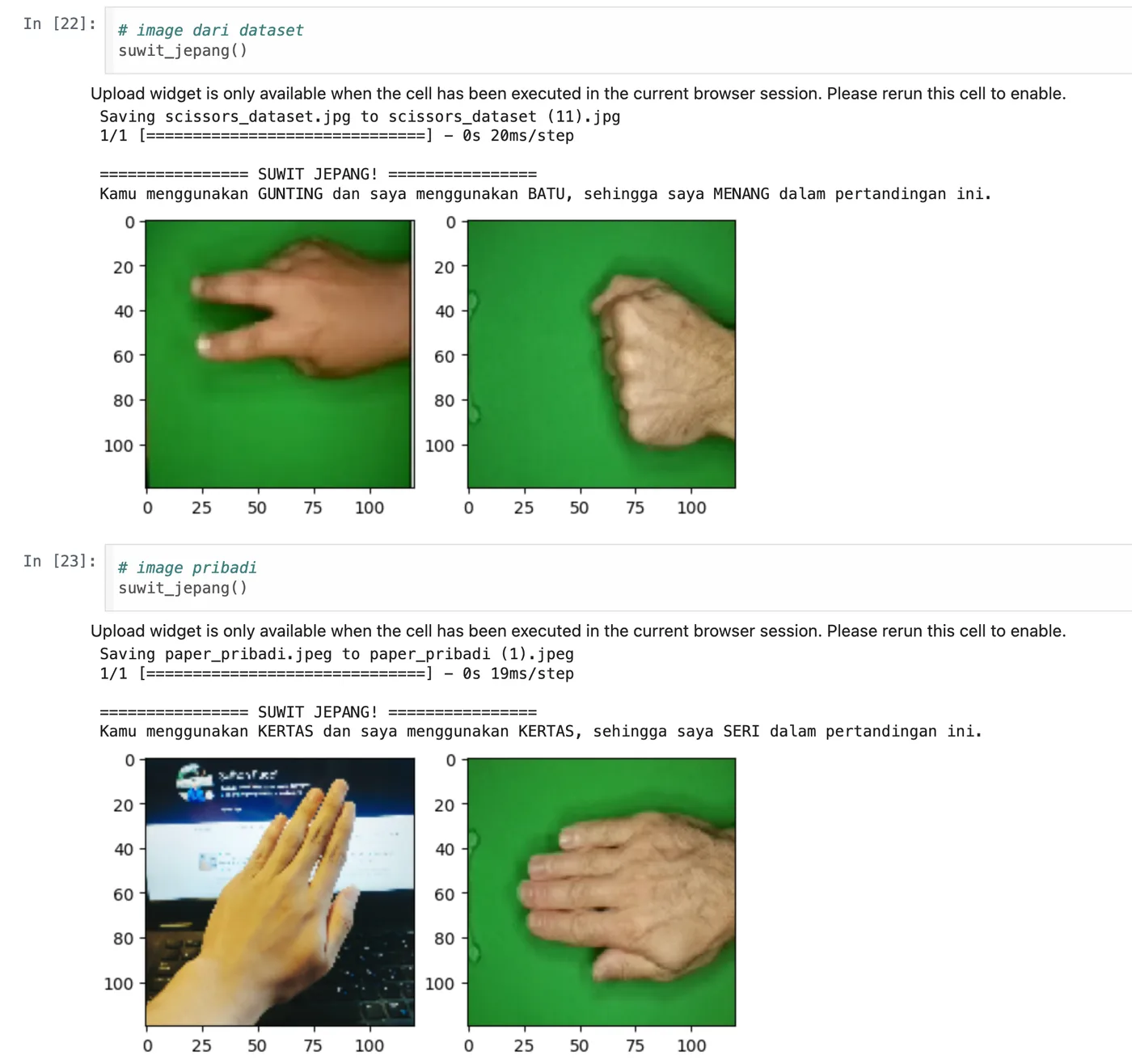
  • Demo-ready classification flow preserved in project artefacts
Retrospective and Limits

What the project proves, and what it does not

Strong case studies show both what was learned and where the current evidence stops.

Retrospective

Next iteration should add reproducible run instructions, confusion-matrix summary, and clearer sample inference artefacts.

Evidence Limits

  • Current sources do not support production inference, deployment maturity, or real-world user outcomes.
  • The project should remain framed as compact CV experimentation and learning evidence.

Lessons

  • Data augmentation can produce major gains without changing model family
  • Validation tracking is essential for trustworthy CV iteration