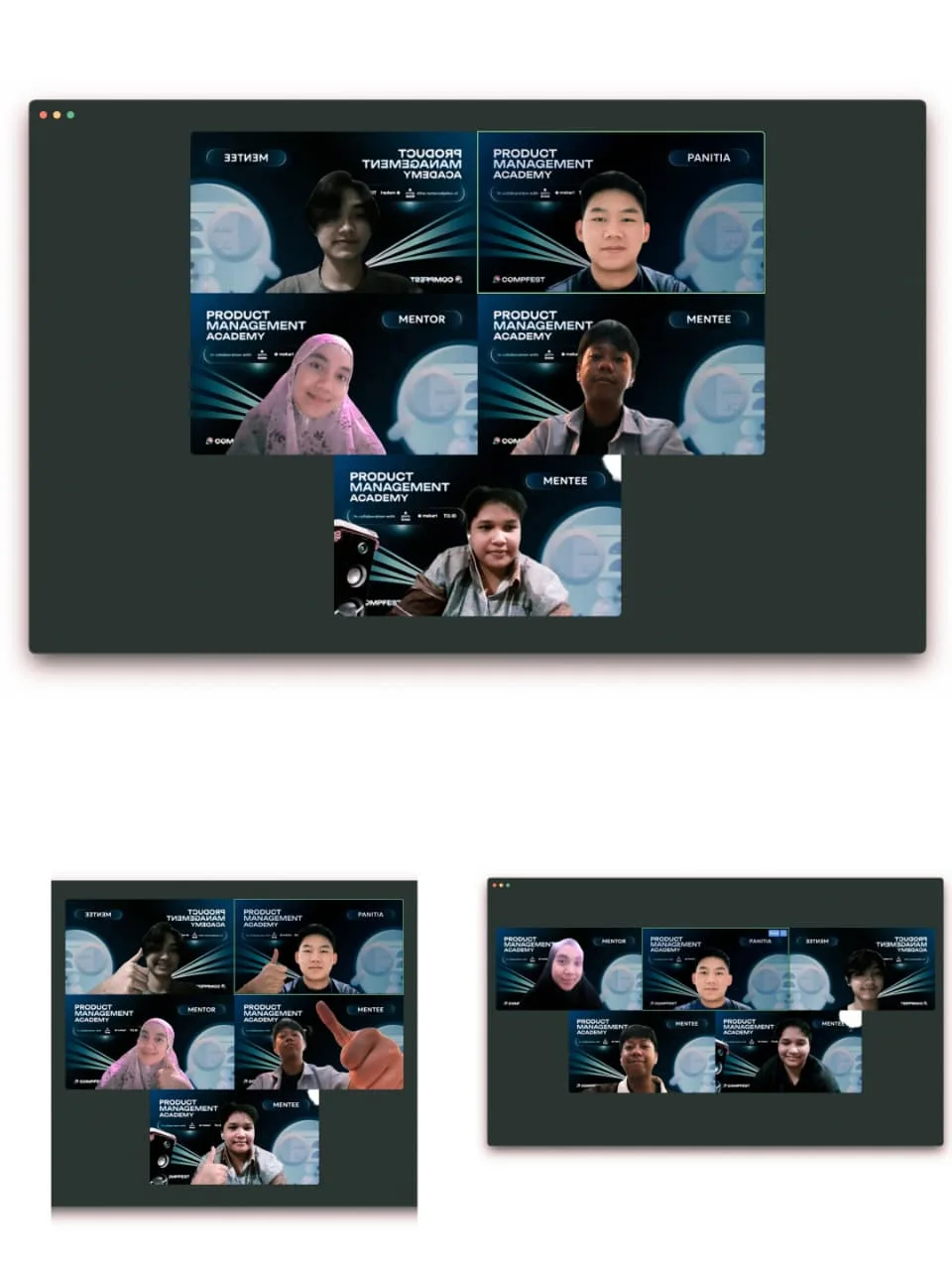
The strategy centered on predictive operations, feedback loops, and healthcare workflow improvement rather than surface-level feature ideation.
CiptaLife
This case turned healthcare bottlenecks into a decision-ready product strategy built around predictive operations, feedback loops, and execution-ready priorities.
A source-backed case study built for recruiter review
This reading path makes the problem choice, evidence quality, user framing, execution decisions, and proof trail visible without overstating what the sources support.
Strategic healthcare information-system case delivered in COMPFEST 17 Product Management Academy.
Secured Best Graduation Night Study Case Team with a decision-ready strategy and execution narrative.
Product architecture proposal that combined healthcare data workflows, predictive modules, and user-journey-driven service touchpoints.
Problem framing before execution
The case-study layer starts with why this problem was selected and how the context justified investment.
Problem Framing Map
Healthcare service decisions were constrained by limited predictive support, weak feedback loops, and fragmented data usage.
The academy case required converting a broad healthcare-service challenge into a decision-ready product direction that could align PM, UX, data, and engineering viewpoints.
The problem was selected because it combined operational pain, cross-functional complexity, and a realistic opportunity for product leverage rather than isolated feature design.
Problem statement
The case exposed limited predictive support, weak feedback loops, and fragmented healthcare data usage.
Solution thesis
Proposed integrated product initiatives with prediction-assisted operations and feedback loops for service-quality decisions.
What supports the narrative
Evidence is surfaced with its source type and credibility note so the recruiter can quickly see what is directly backed versus intentionally constrained.
PRD sections, personas, and user journeys were produced to make the concept execution-ready.
Selection into the PM academy came from a competitive 4,000+ applicant pool.
Credibility Notes
- ●Claims stay at strategy, research framing, and documented artefact level; no real hospital deployment or patient outcome is implied.
- ●The case is presented as a product-planning exercise with strong documentation, not as a validated live healthcare system.
User framing stays explicit
When formal research artefacts are not available, the page still explains who the work served and why that user framing is justified by the existing sources.
The proposed solution emphasized prediction-assisted operations and feedback loops, pointing to operational decision users.
The delivery asset was a decision-ready PRD that aligned multiple disciplines around one product direction.
How design thinking translated into decisions
The goal is to show the trace from research and insight to concrete product or system decisions, then to the outcomes those decisions supported.
Design Thinking Flow
Each step keeps the movement from evidence to action explicit before the rationale expands it.
- Step 1Problem diagnosis
Started from service bottlenecks and weak feedback loops before proposing any solution modules.
Signal: Problem framing preceded solution packaging. - Step 2User and journey framing
Translated research into personas, user journeys, and product requirements to make the concept concrete.
Signal: PRD artifacts anchored the transition from insight to design. - Step 3Execution narrative
Combined product architecture, roadmap logic, and strategic pitch into one handoff-ready story.
Signal: Best Team recognition validated the clarity of the final product narrative.
Decision Rationale
Each decision keeps the path from insight to execution visible before ending on the outcome signal.
A multidisciplinary academy case can drift without one shared decision artifact.
Used structured PRD output to align personas, journeys, and feature logic.
The project is reviewable as an end-to-end product planning package instead of only a pitch deck.
The problem was not only information access, but low decision support quality.
Framed predictive modules and feedback loops as core parts of the product direction.
The strategy differentiates itself through operations support, not only data centralization.
Execution choices and delivery details
This section preserves the technical and operational substance: architecture, responsibilities, trade-offs, and implementation quality signals.
System Design
Product architecture proposal that combined healthcare data workflows, predictive modules, and user-journey-driven service touchpoints.
Source-backed Impact
Secured Best Graduation Night Study Case Team with a decision-ready strategy and execution narrative.
Responsibilities
- ●Led problem framing and product strategy synthesis
- ●Authored PRD sections including personas and user journeys
- ●Aligned data, UX, and engineering perspectives into one product narrative
Stack Decisions
- ●Prioritized product architecture and service design over implementation detail
- ●Used structured PRD artifacts to reduce ambiguity across collaborators
Trade-offs
- ●Focused on strategic depth rather than production deployment
- ●Balanced case realism with competition time constraints
Challenges
- ●Aligning cross-functional assumptions under strict deadlines
- ●Translating qualitative and quantitative findings into a coherent roadmap
Architecture and outcome snapshot
This visual layer keeps execution readable: how the system or delivery flow was structured and which source-backed outcomes mattered most.
Execution Flow
- Step 1Problem Framing
Mapped bottlenecks across predictive capability, feedback loops, and fragmented data operations.
Signal: Cross-functional diagnosis completed before drafting solutions - Step 2Solution Blueprint
Designed integrated feature tracks: surge prediction, data readiness checks, and feedback improvement loop.
Signal: Feature stack directly tied to measurable operational pain points - Step 3Execution Narrative
Consolidated PM, UX, Data, and Engineering viewpoints into one PRD and final strategic pitch.
Signal: Best Team recognition in COMPFEST 17 graduation case session
Outcome Snapshot
- Selection Stage4,000+ applicant pool
Competitive context for academy entry
- Delivery AssetEnd-to-end PRD set
Personas, user journeys, and strategic roadmap included
- OutcomeBest Team
Best Graduation Night Study Case Team
What was delivered and what can be verified
Outcome claims remain conservative and source-backed, while proof records and recruiter-safe links surface the strongest verification trail available.
Validation Signals
- ●Best Graduation Night Study Case Team recognition.
- ●Comprehensive PRD and case presentation delivered for academy review.
Source-backed Outcomes
- ●Best Team recognition at COMPFEST 17 Academy
- ●Selected from 4,000+ applicants into the PM track
- ●Comprehensive PRD and case presentation delivered
Proof
- Best Team
Best Graduation Night Study Case Team
COMPFEST 17Sep 2025
Links
What the project proves, and what it does not
Strong case studies show both what was learned and where the current evidence stops.
Retrospective
If extended beyond competition scope, the plan should be validated with pilot metrics in real healthcare operations.
Evidence Limits
- ●Current sources do not provide interview transcripts, survey datasets, or pilot-usage metrics.
- ●The project should be read as source-backed strategy work, not as validated healthcare deployment.
Lessons
- ●Strong product storytelling must be backed by decision-ready artifacts
- ●Cross-functional clarity is a competitive advantage in case delivery